
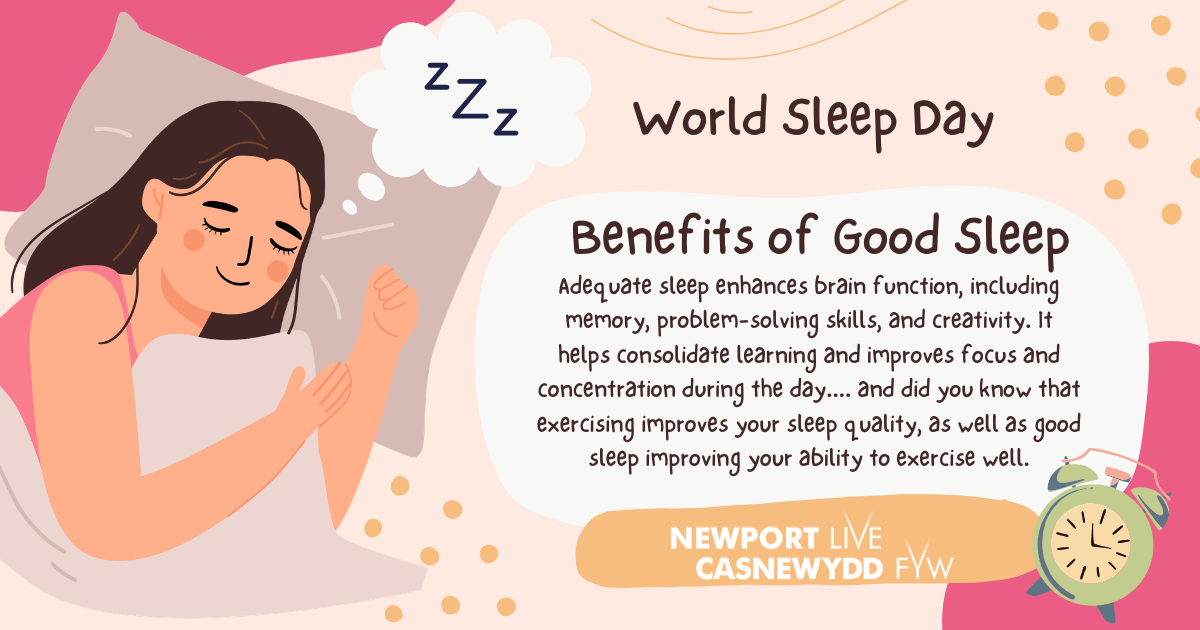
World Sleep Day (13 March) is an annual awareness campaign organised by the World Sleep Society to highlight how good sleep supports physical health, mental wellbeing, and performance. Exercise is one of the most effective lifestyle habits for improving sleep quality. Here at Newport Live, our Fitness Team have come up with some top tips to help you understand and improve your sleep patterns.
Why Sleep Quality Matters
Good sleep is essential for the body and brain. High-quality sleep helps with:
- Physical recovery: Muscles repair and grow during sleep.
- Hormone regulation: Sleep balances hormones that control appetite, stress, and growth.
- Brain function: Memory, focus, learning, and decision-making improve with good sleep.
- Immune system: Adequate sleep strengthens immune response.
- Mental health: Poor sleep is strongly linked to anxiety, depression, and mood issues.
Chronic sleep deprivation can increase risk of:
- Obesity
- Type 2 Diabetes
- Cardiovascular Disease
- Reduced cognitive performance and productivity.
How Exercise Improves Sleep
Regular physical activity can significantly improve both sleep quality and sleep duration.
1. Helps You Fall Asleep Faster
Exercise reduces the time it takes to fall asleep (sleep latency) by lowering stress levels and promoting relaxation.
2. Increases Deep Sleep
Physical activity increases slow-wave sleep (deep sleep), which is the most restorative stage of sleep.
3. Regulates Circadian Rhythm
Exercise helps regulate the body's internal clock, improving consistency in sleep and wake times.
4. Reduces Stress and Anxiety
Exercise lowers stress hormones like cortisol and increases mood-boosting chemicals such as endorphins.
5. Improves Sleep Disorders
Regular exercise may reduce symptoms of conditions like Insomnia and Obstructive Sleep Apnea.
Recommended Sleep Amounts
According to the National Sleep Foundation, recommended sleep duration varies by age:
|
Age Group |
Recommended Sleep |
|
Newborns (0–3 months) |
14–17 hours |
|
Infants (4–11 months) |
12–15 hours |
|
Toddlers (1–2 years) |
11–14 hours |
|
Preschool (3–5 years) |
10–13 hours |
|
School Age (6–13 years) |
9–11 hours |
|
Teenagers (14–17 years) |
8–10 hours |
|
Adults (18–64 years) |
7–9 hours |
|
Older Adults (65+) |
7–8 hours |
Quality matters as much as quantity — frequent waking or restless sleep reduces recovery benefits. For anyone who has a Smart Watch such as Garmin you can track your own sleep patterns and quality of sleep using this -it will help you both understand it and improve it.
Exercise Tips for Better Sleep
To maximize sleep benefits:
✔ Exercise regularly (at least 150 minutes of moderate activity per week - this can be anything from brisk walking, swimming, an exercise class, a run outdoors, a track cycle session)
✔ Morning or afternoon workouts may benefit circadian rhythm
✔ Avoid very intense exercise within 1–2 hours of bedtime
✔ Include relaxing activities like stretching, yoga, or walking in the evening (such as our Couch 2 5k walking programme, or our Twilight yoga!)
✔ Maintain a consistent sleep schedule
Key Takeaway
Sleep and exercise have a two-way relationship:
- Exercise improves sleep quality.
- Good sleep improves exercise performance, recovery, and motivation.
Together they create a positive health cycle.
So, if you haven't already: Set yourself a new target this week - an earlier bedtime, a better pre-bed routine, a new gym class or simply to stick to your existing routine - and feel the benefits!


